Helping student renters find a place without the broker fee
- Company
- Nobee
- Timeline
- 7 months · Feb-Sep 2022
- Scope
- Product Design • Research • Leadership
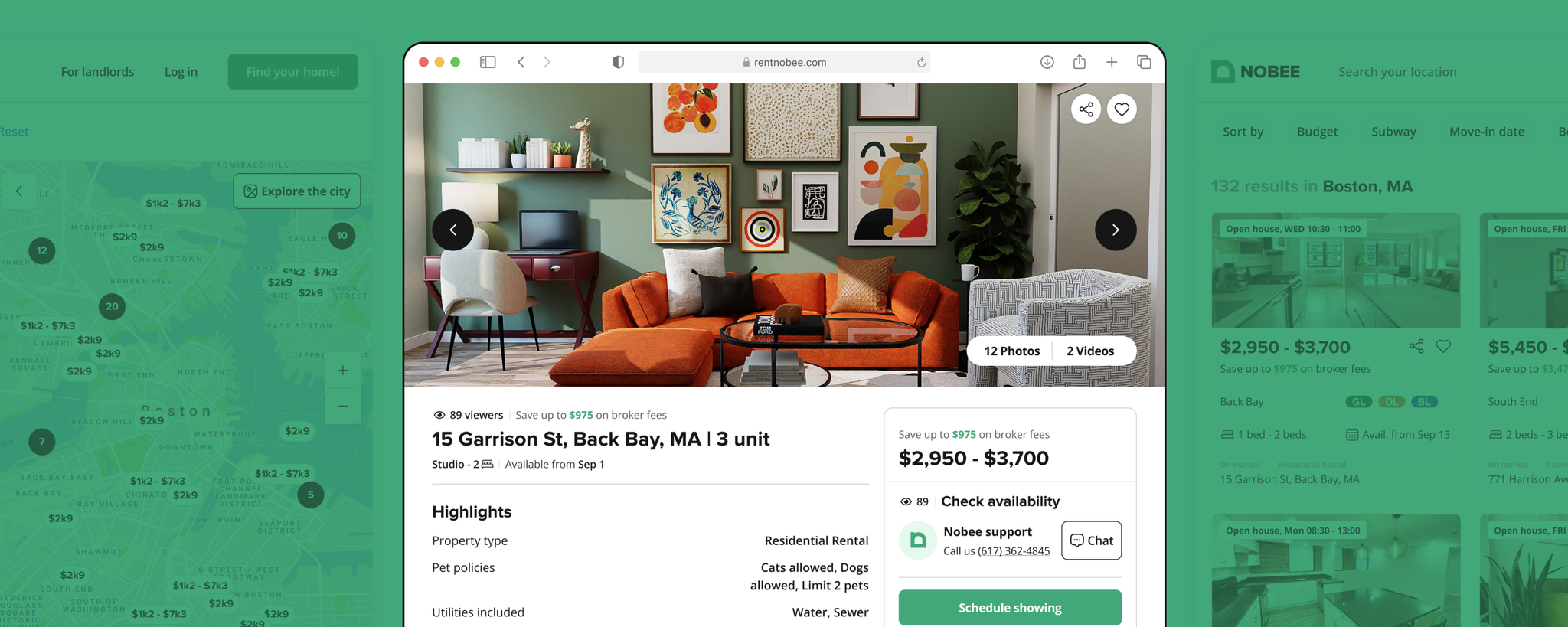
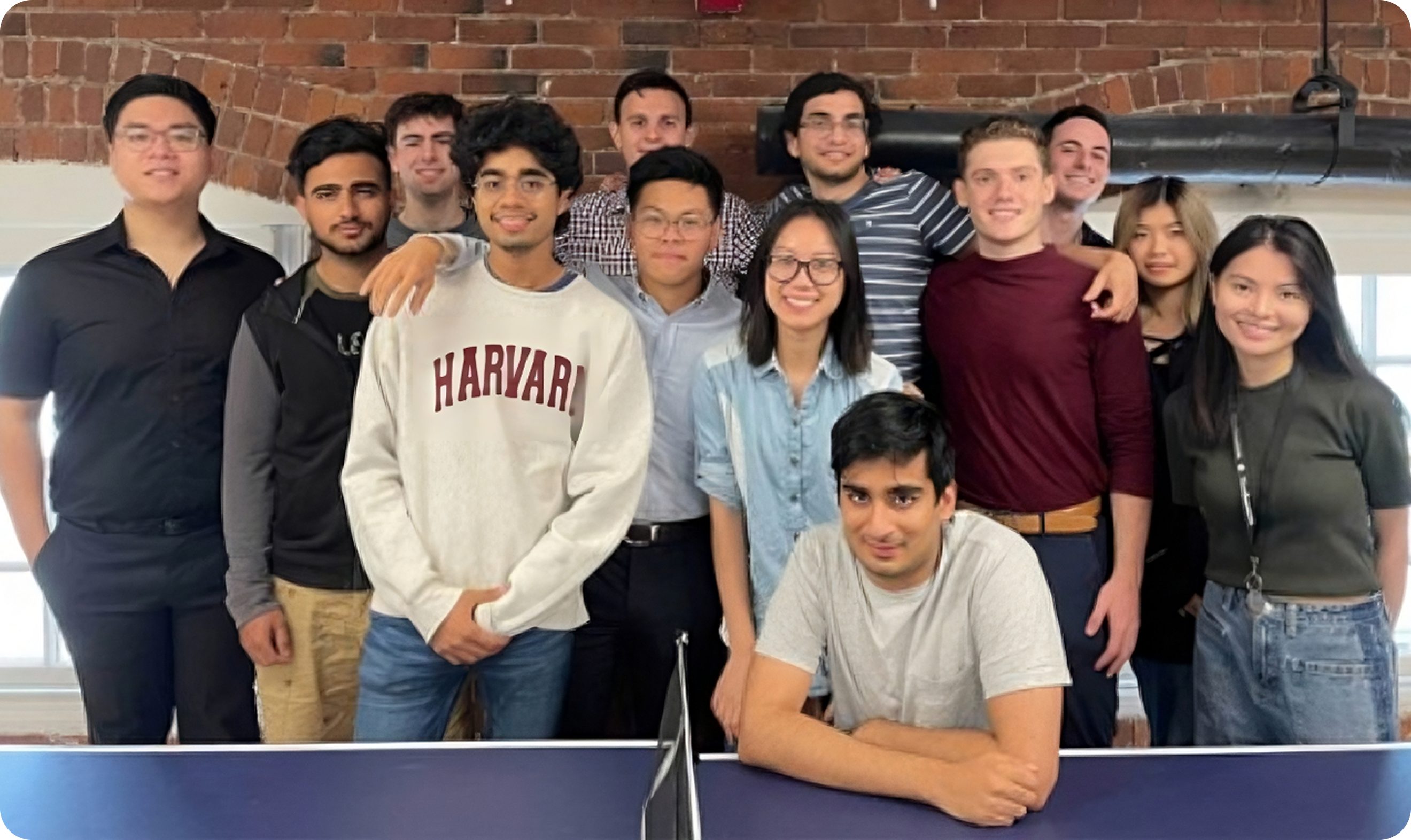
Nobee makes housing faster, cheaper, and friendlier for students. I joined early in the product's life - and by the 2022 peak season we hit 1,000 requested showings in a single week, raised $1.3M in pre-seed funding, and grew new users 113% in the months after the app launched.
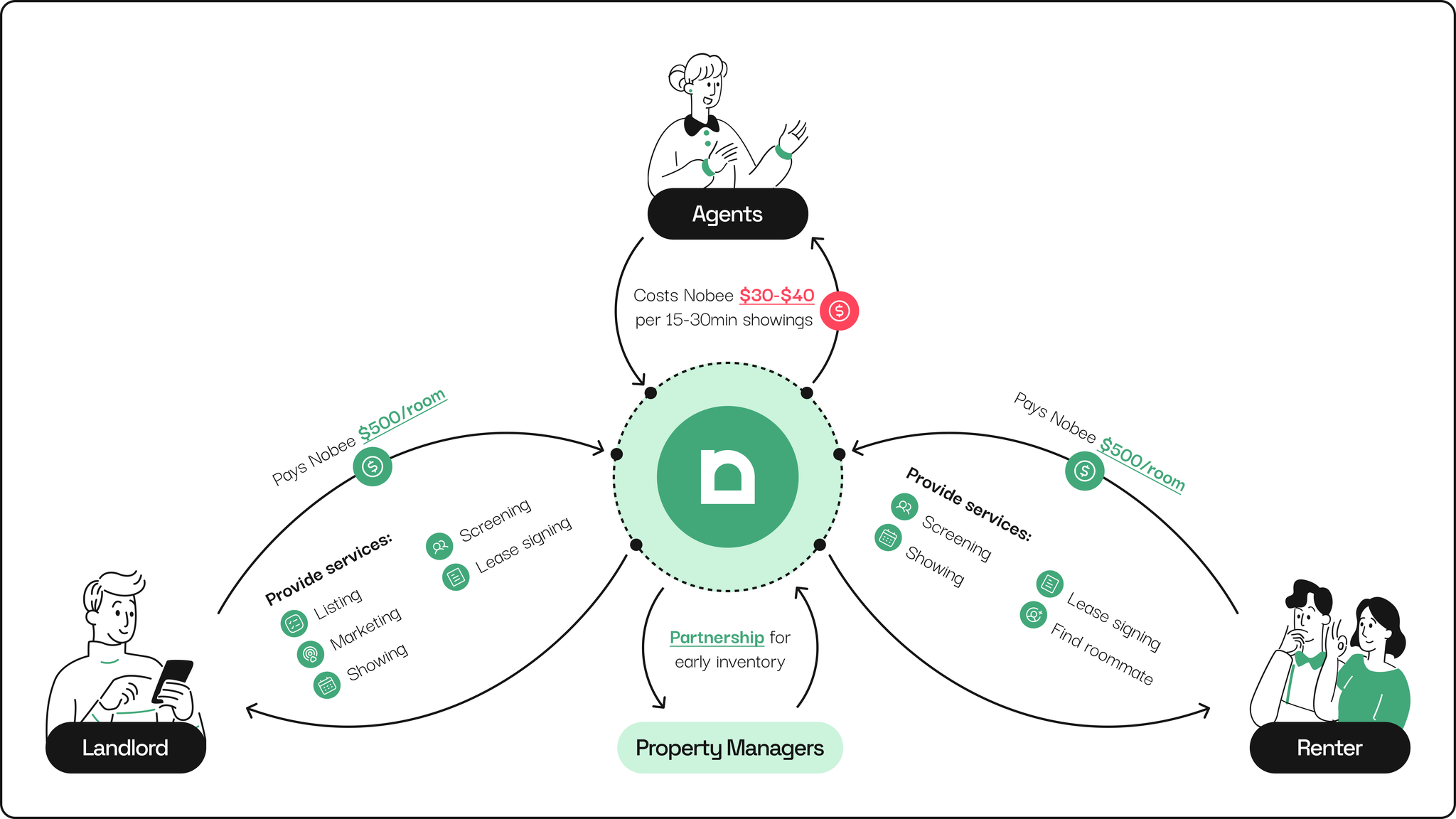
Nobee's in-house agents run 15-30 minute showings for a flat $500 per room - paid by renter, landlord, or both - against an industry broker's fee of 15% of the first year's rent (around $2,000), due at signing on top of first month, last month, and a deposit.
The saving is real, but it's unfamiliar. Students didn't trust or understand it, and adoption of scheduled showings stayed low.
Working with the business team, we scoped two metrics:
- Successful-showing conversion - from the Schedule showing CTA on the property page
- Property-page views per session - fewer views signalling search was helping renters find the right place faster
- Proof of savings - testimonials, reviews, and community impact, to build trust in the flat-fee model.
- Hierarchy around what matters - price, neighborhood, and transportation, foregrounded throughout the journey.
- Group showings - surfaced as a way to find roommates, split fees, and fill vacancies faster.
Three findings stood out:
- Transit access was often decisive - easy subway and bus links mattered most.
- The one-month broker fee felt excessive for a service used just once a year.
- Students sought roommates from shared backgrounds - same school, major, or community.
They spend most of their time at school or with friends, so they cared more about transport and community than an apartment's exact address.

Desk research backed it up - renters lead with budget, and weigh price and neighborhood over the precise address:
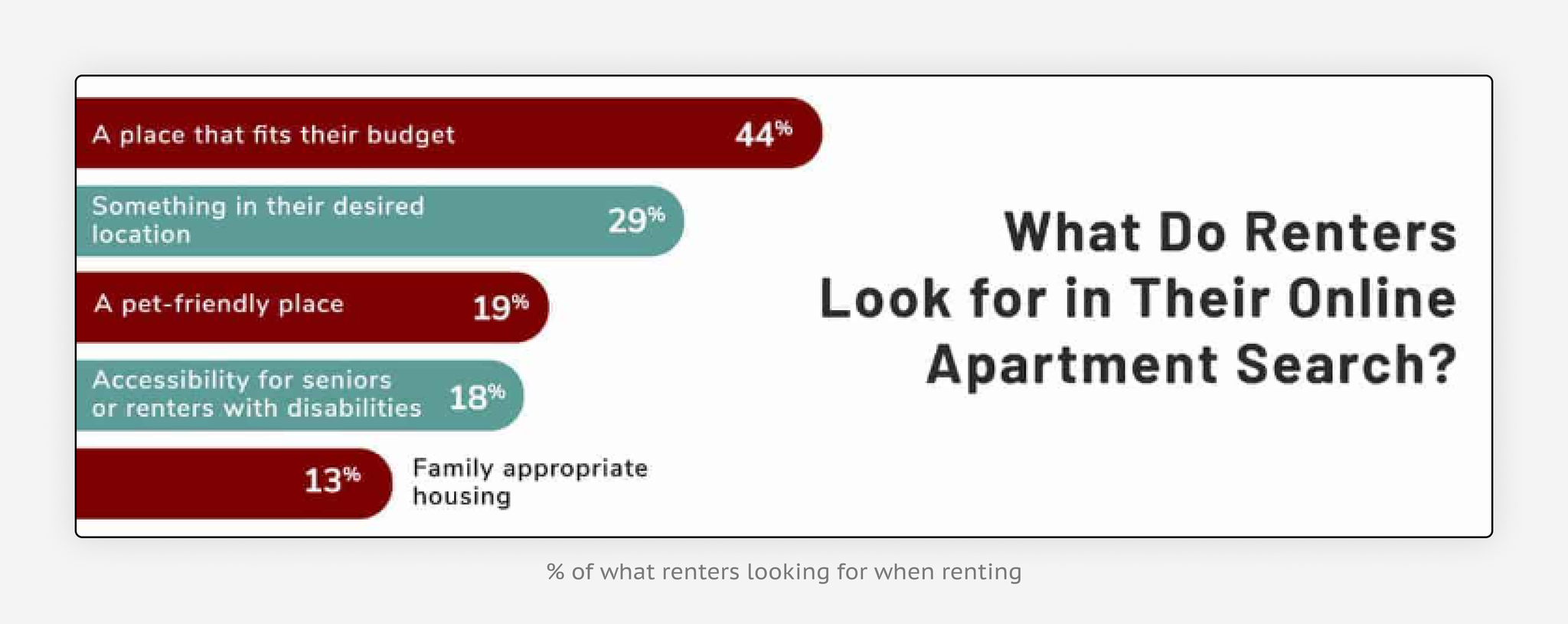
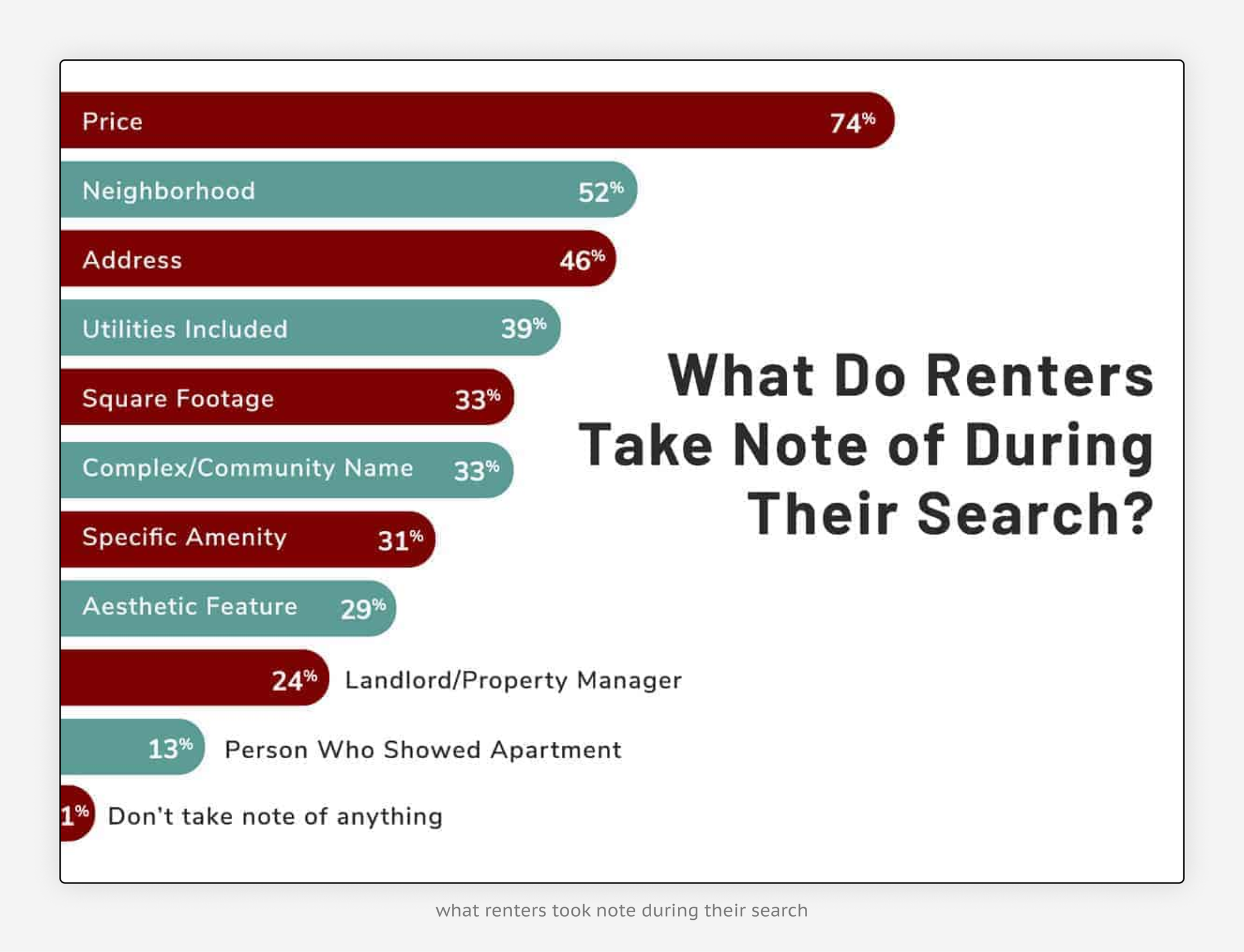
A rental has three sides - renters, landlords, and agents - each wanting something different, so we mapped all of them against the renter's path.
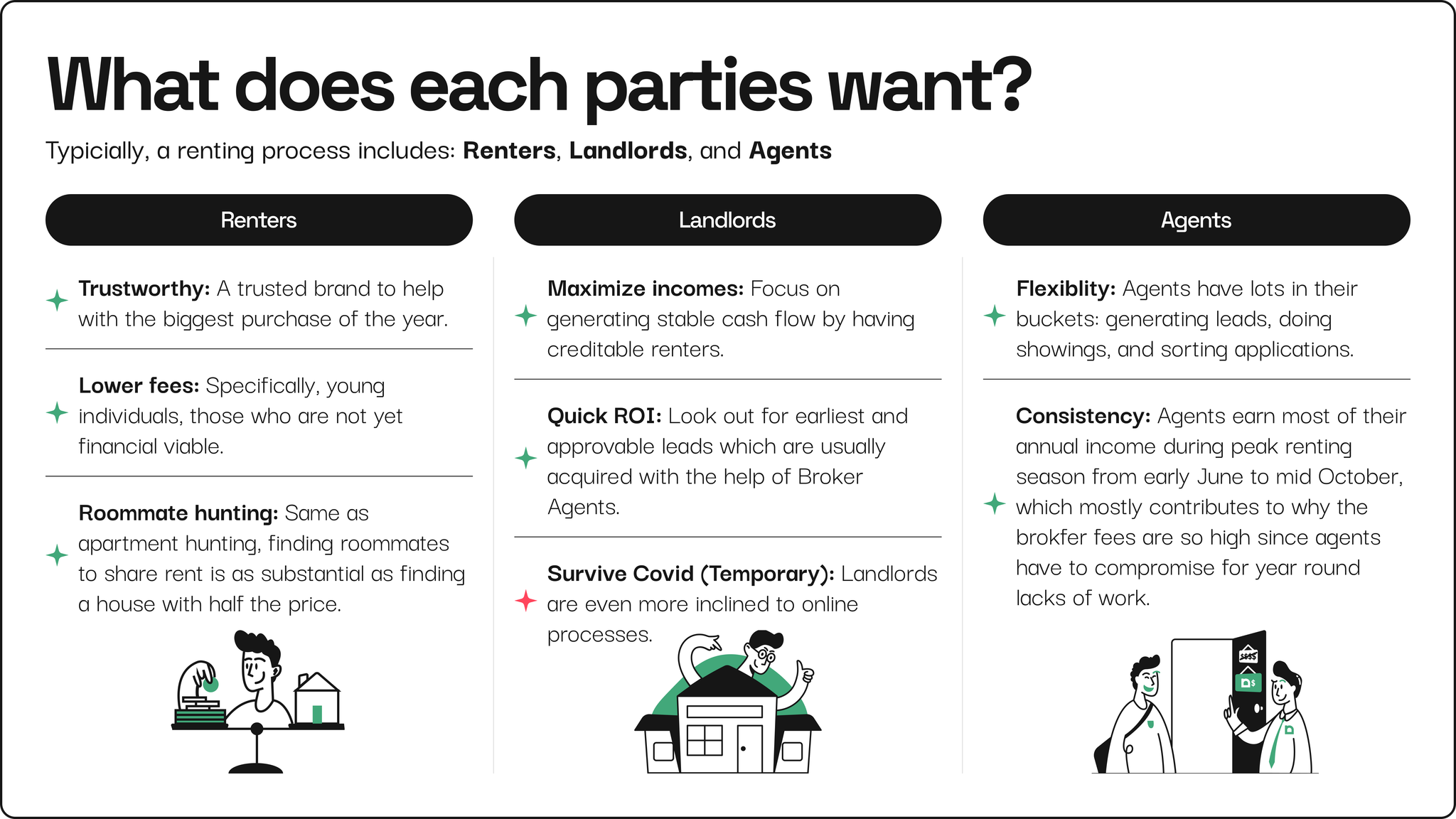
The map pointed to three opportunities, each answering a need from the parties above:
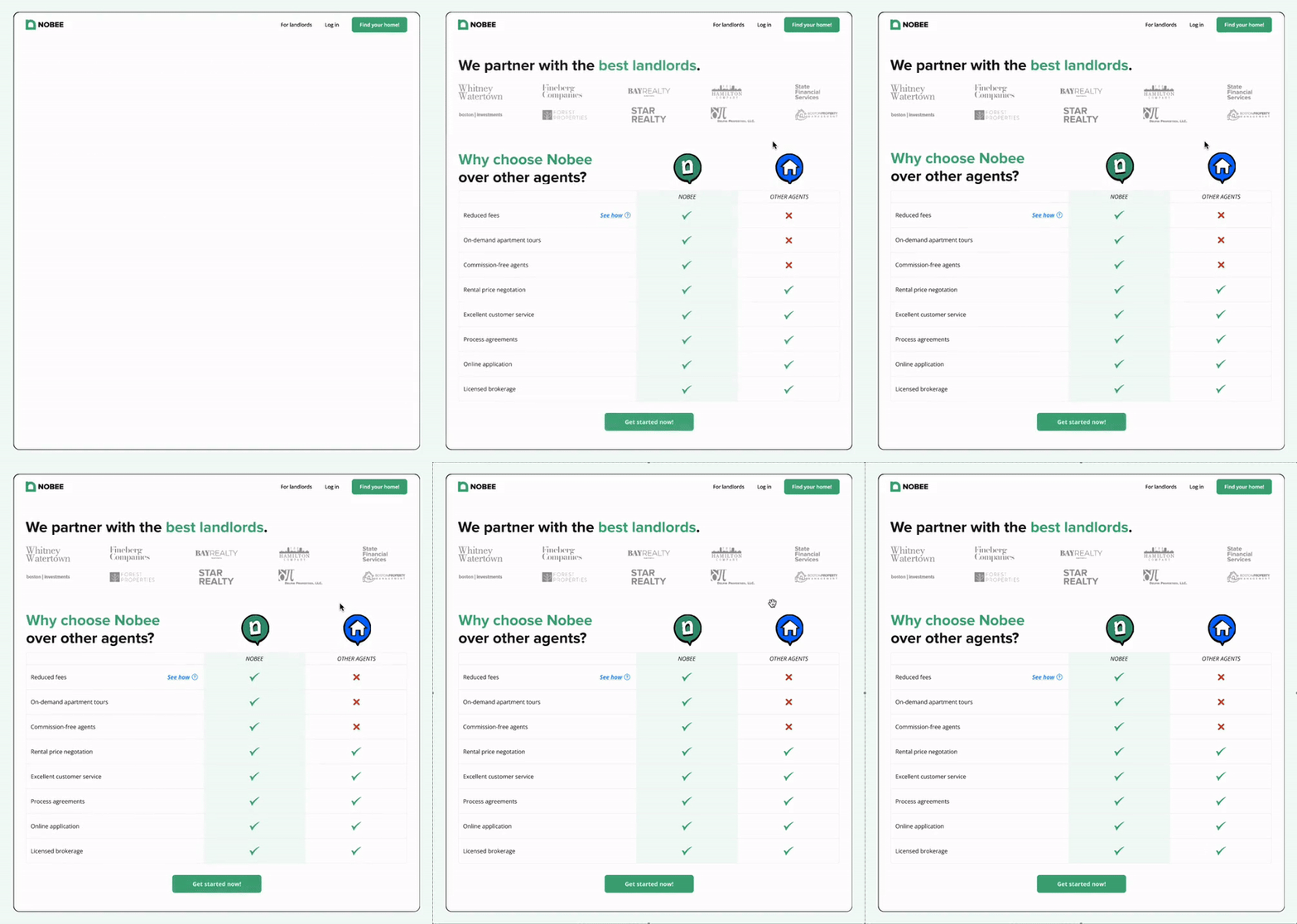
- Prove the broker-fee saving - renters wanted a trusted brand and lower fees, so we needed to make the saving self-evident across the app.
- Lead with what students weigh - price, neighborhood, and transportation, the renter's top priorities.
- Make it easy to join a showing - group showings that work for every side: roommates for renters, quicker ROI for landlords, and steadier bookings income for agents.
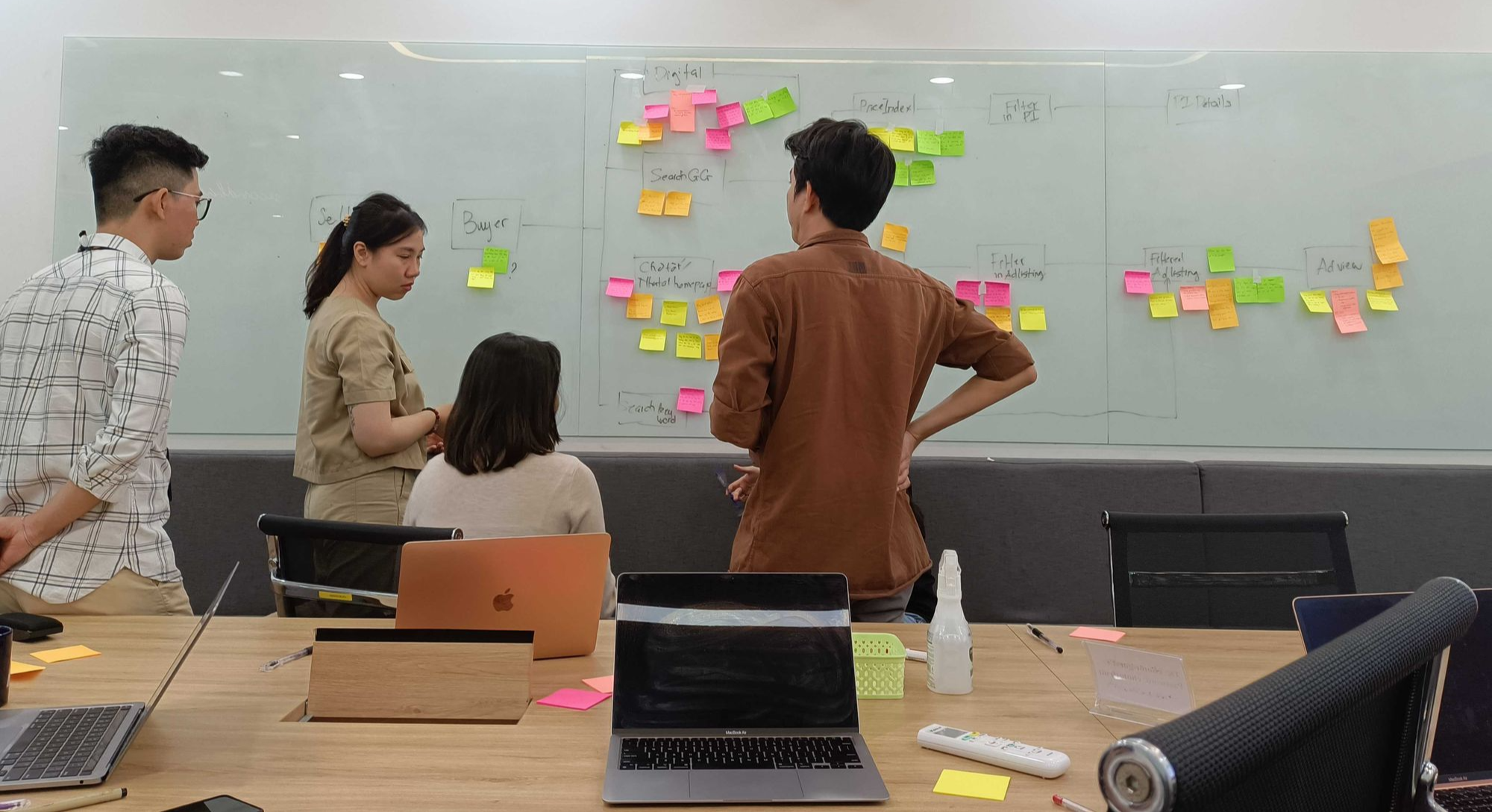
Those values needed somewhere to land, so we pinned them to three entry points in the renter's journey:
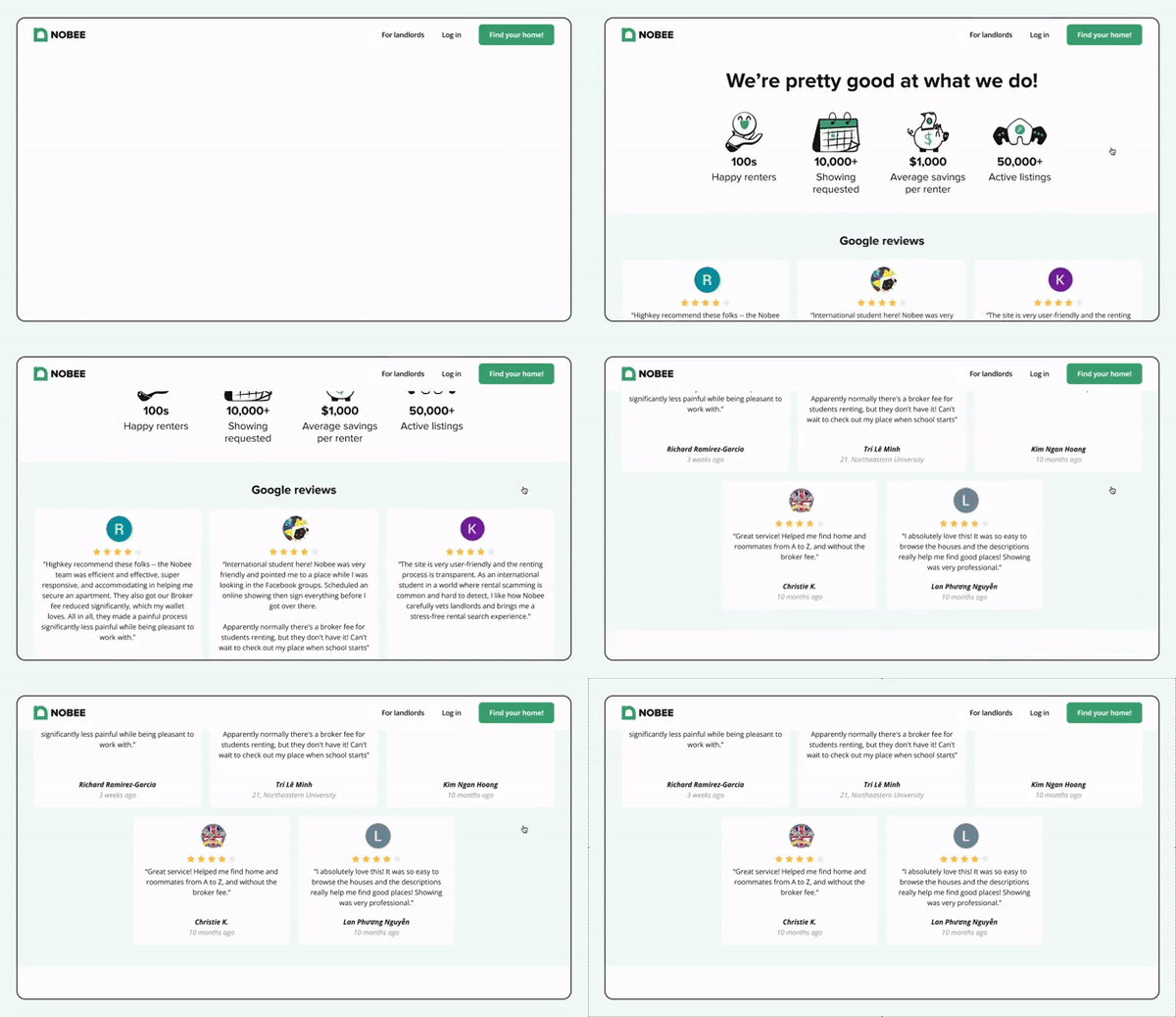
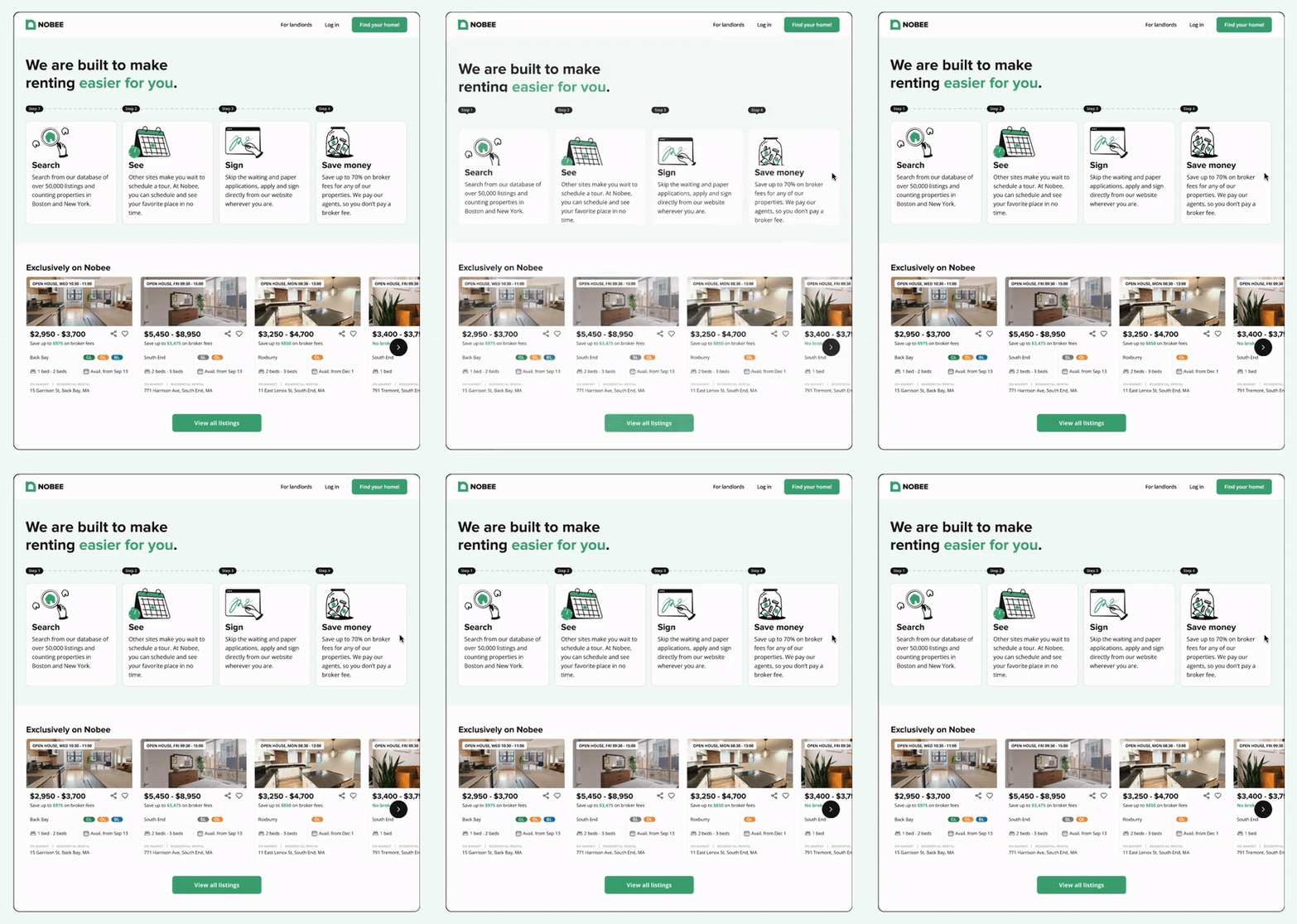
- Landing page - renter testimonials, our recorded impact, and how the flat-fee model works.
- Property card - the details students want first: price, neighborhood, and transportation.
- Property page - deeper property information, alongside available showings and open-house tours.

An audit of the old card flagged three gaps - it wasn't earning the click:
- Price over address - price matters more to student renters than the exact location.
- A clearer selling point - most traffic lands straight on Search or a property, so the broker-fee saving has to be self-evident.
- Include what matters - price, neighborhood, and transportation.
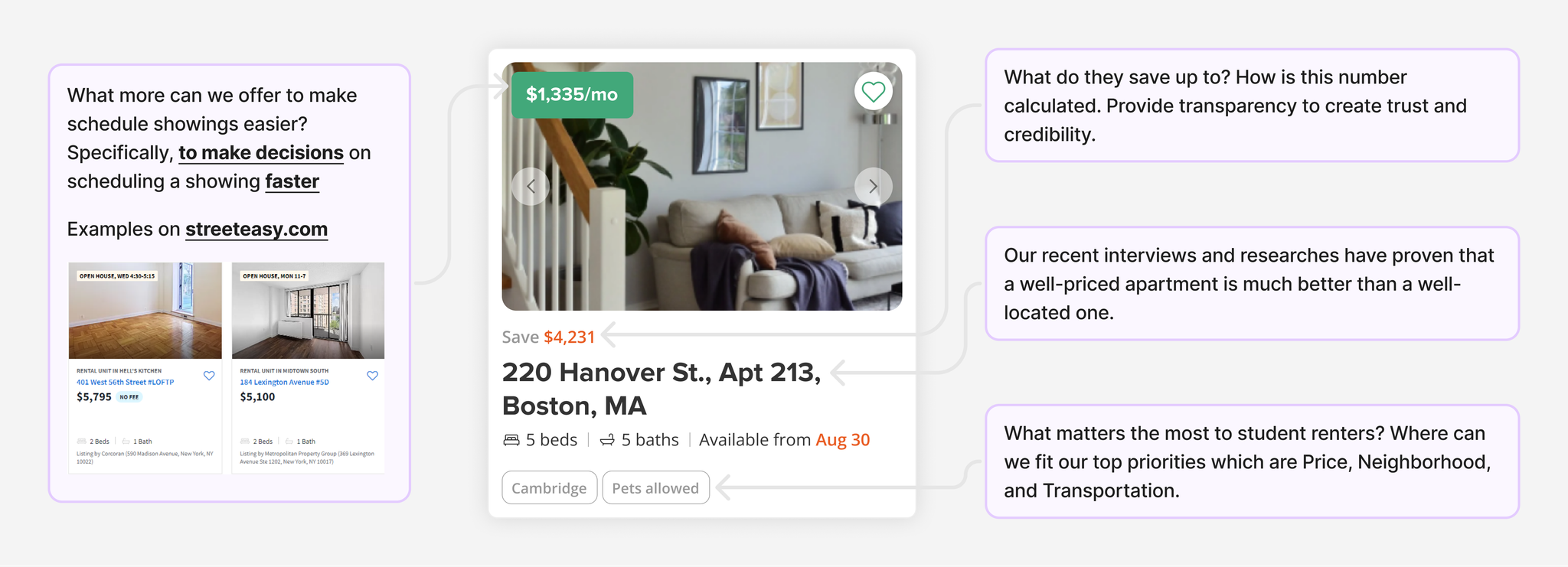
So we redesigned the card and A/B tested it against the control:
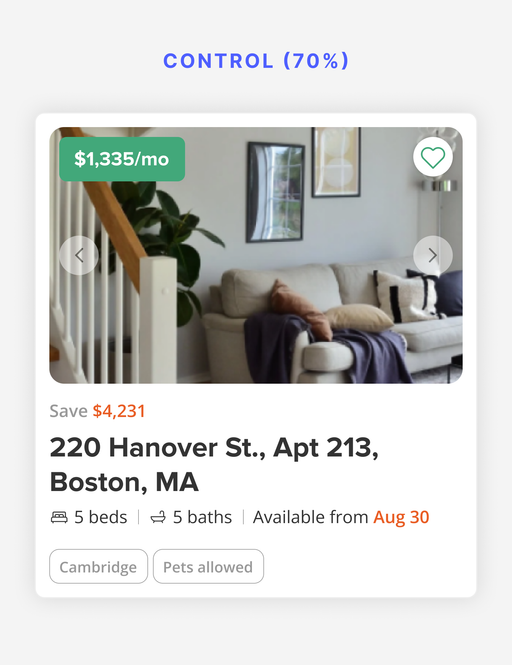
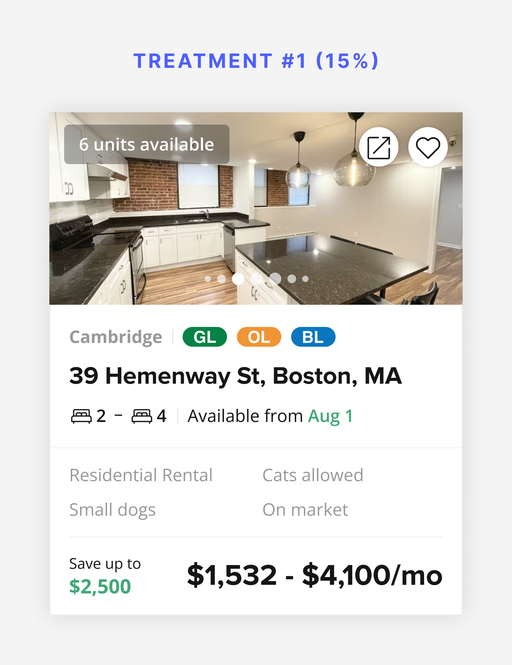
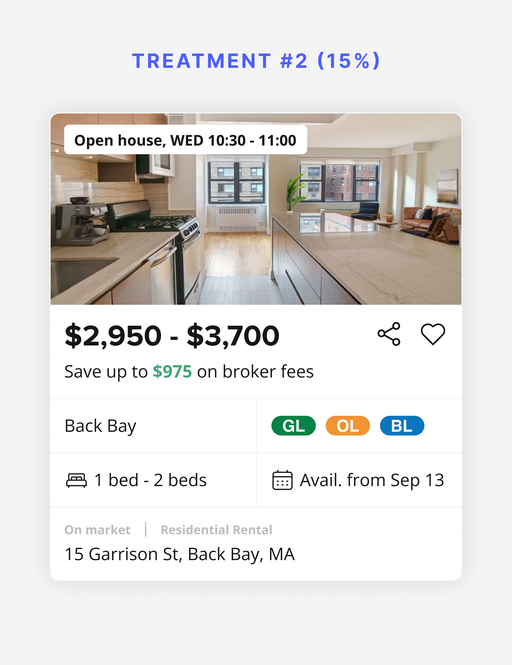
We also lifted search itself - filter-bar updates, a trending-property section, and popular keywords - so renters reach the right card faster.
The page was outdated, so we rebuilt it around scannable highlights, student-relevant details (transit, broker fees saved), and prominent available showing sections for open-house tours and group showings.
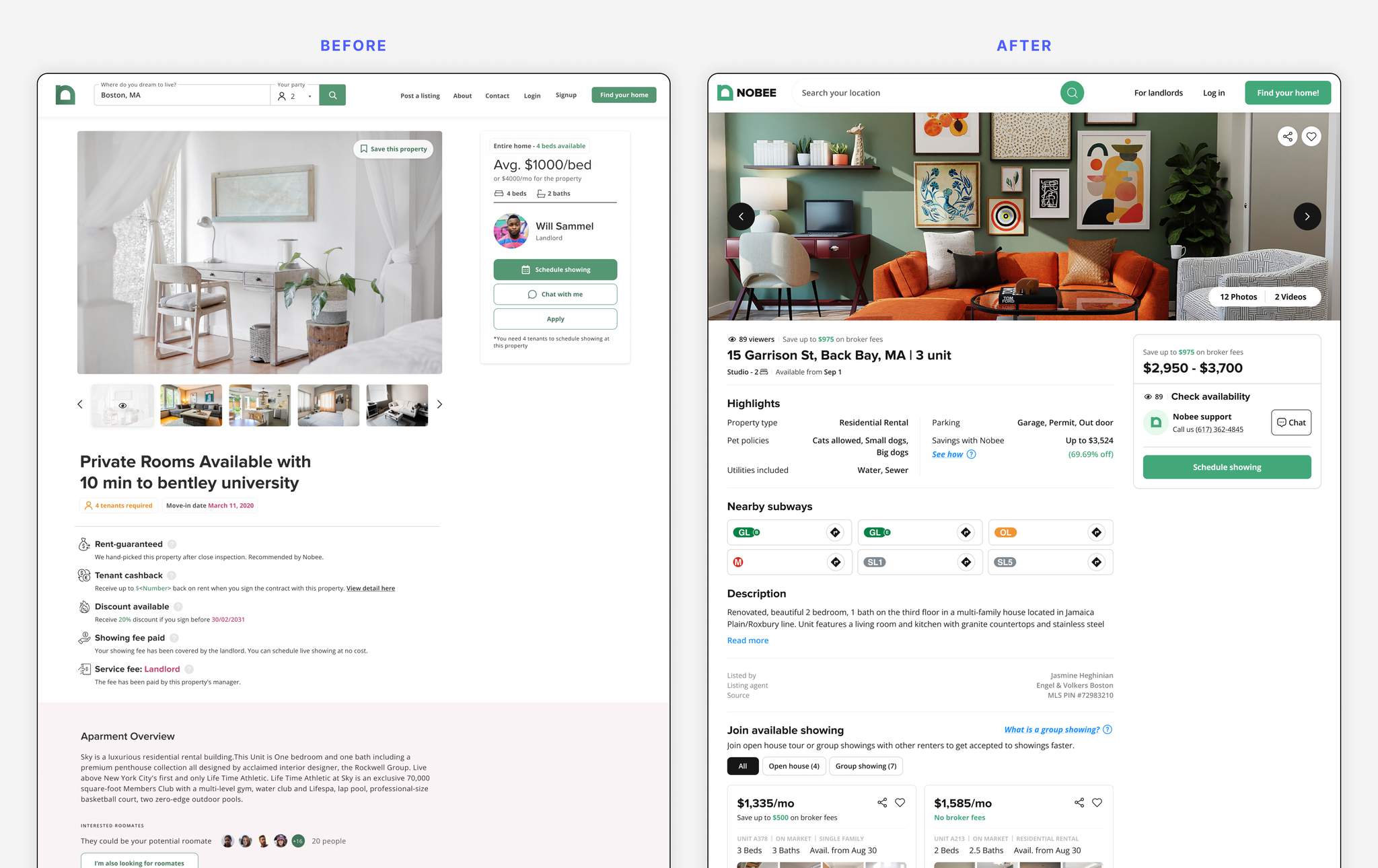
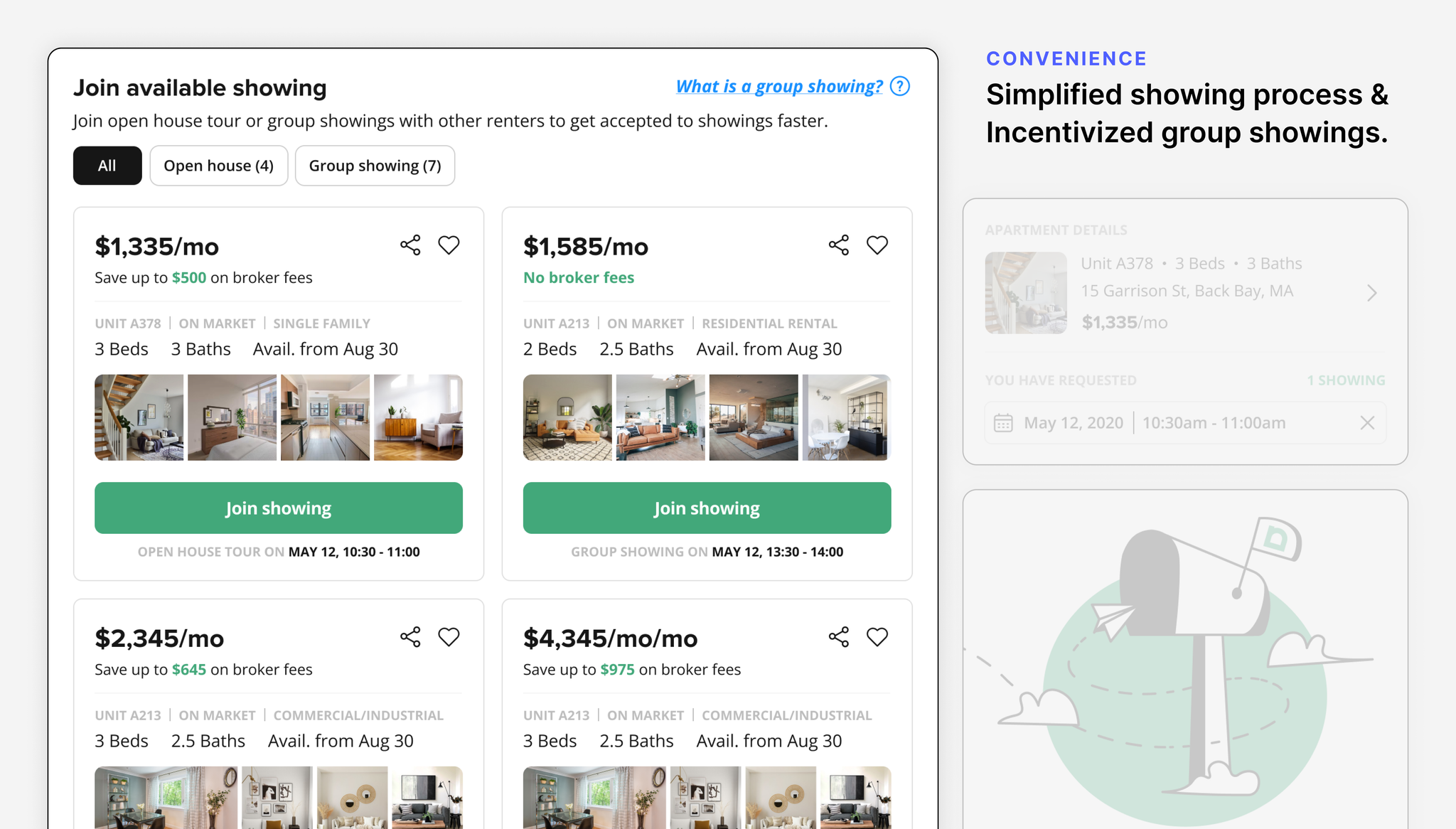
Looking for ways to cut the clicks it took to schedule a showing, we landed on group showings - renters joining each other's tours. It turned out to help everyone:
- Renters get a better shot at landing the place - and may meet suitable roommates to split the rent.
- Landlords see quicker ROI and less hassle confirming a stream of separate touring requests.
- Agents run one showing instead of many, lifting the quality of each pitch.
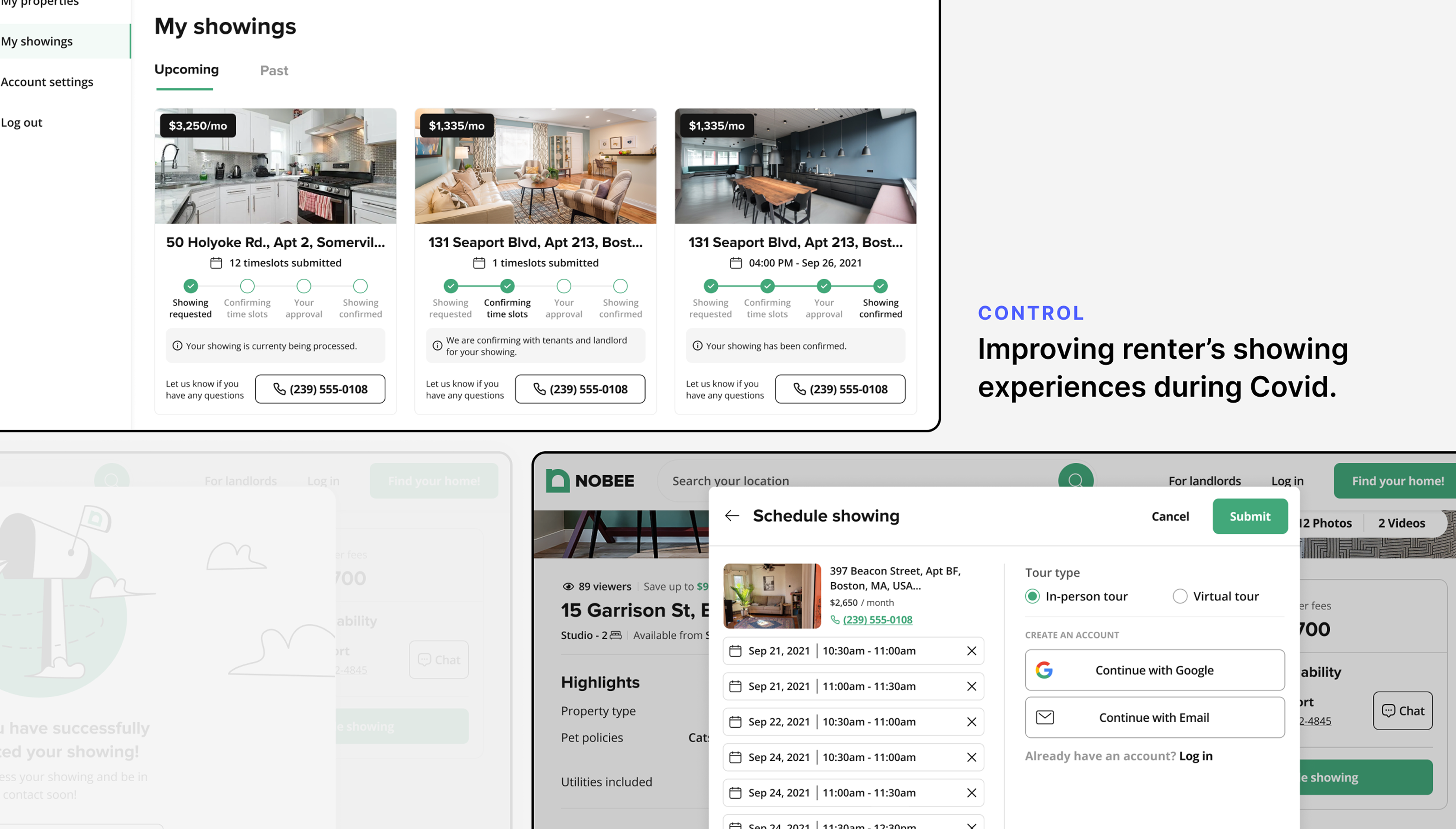
Open-house tours and group showings also made the whole process safer to run through Covid.
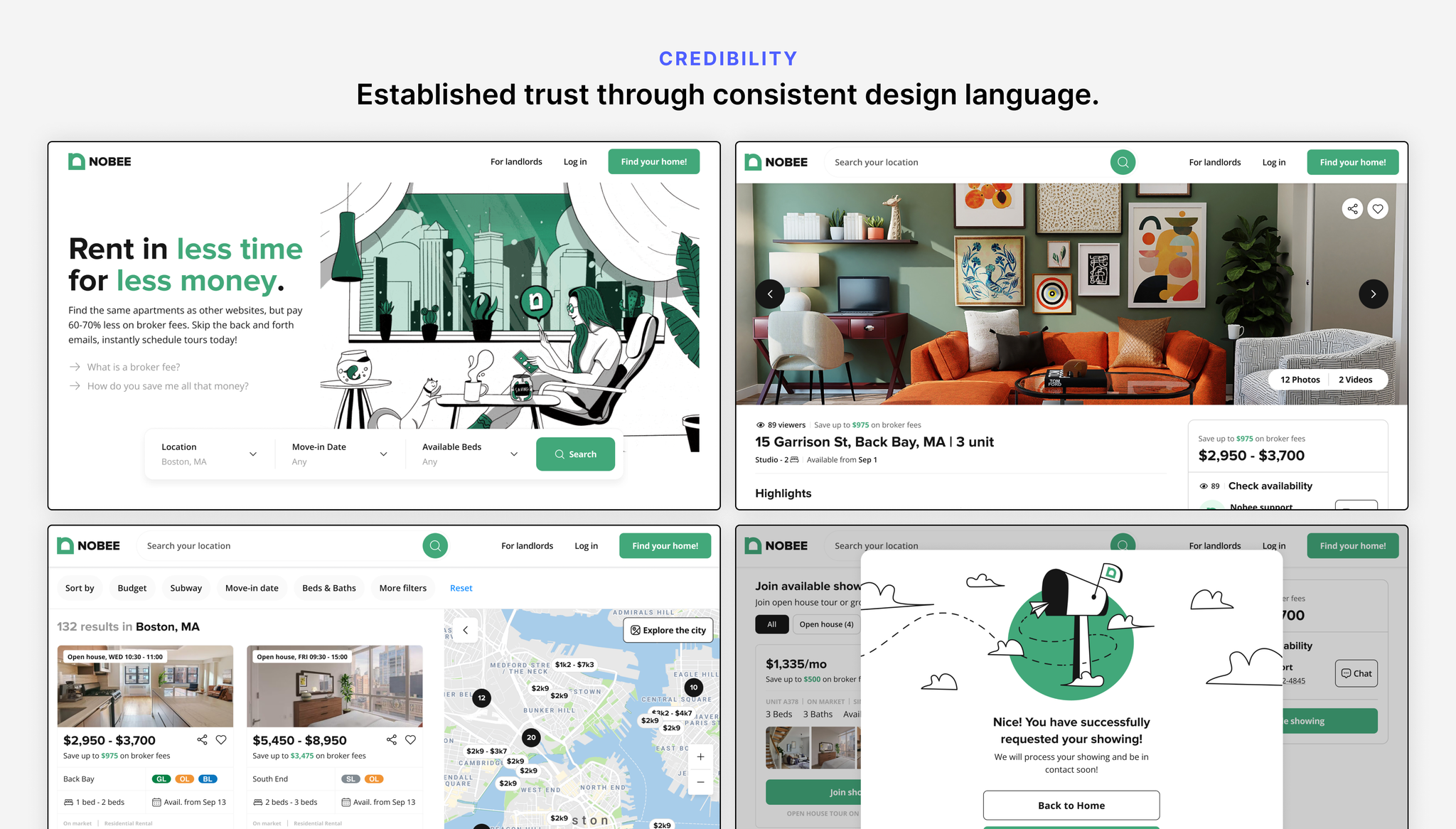
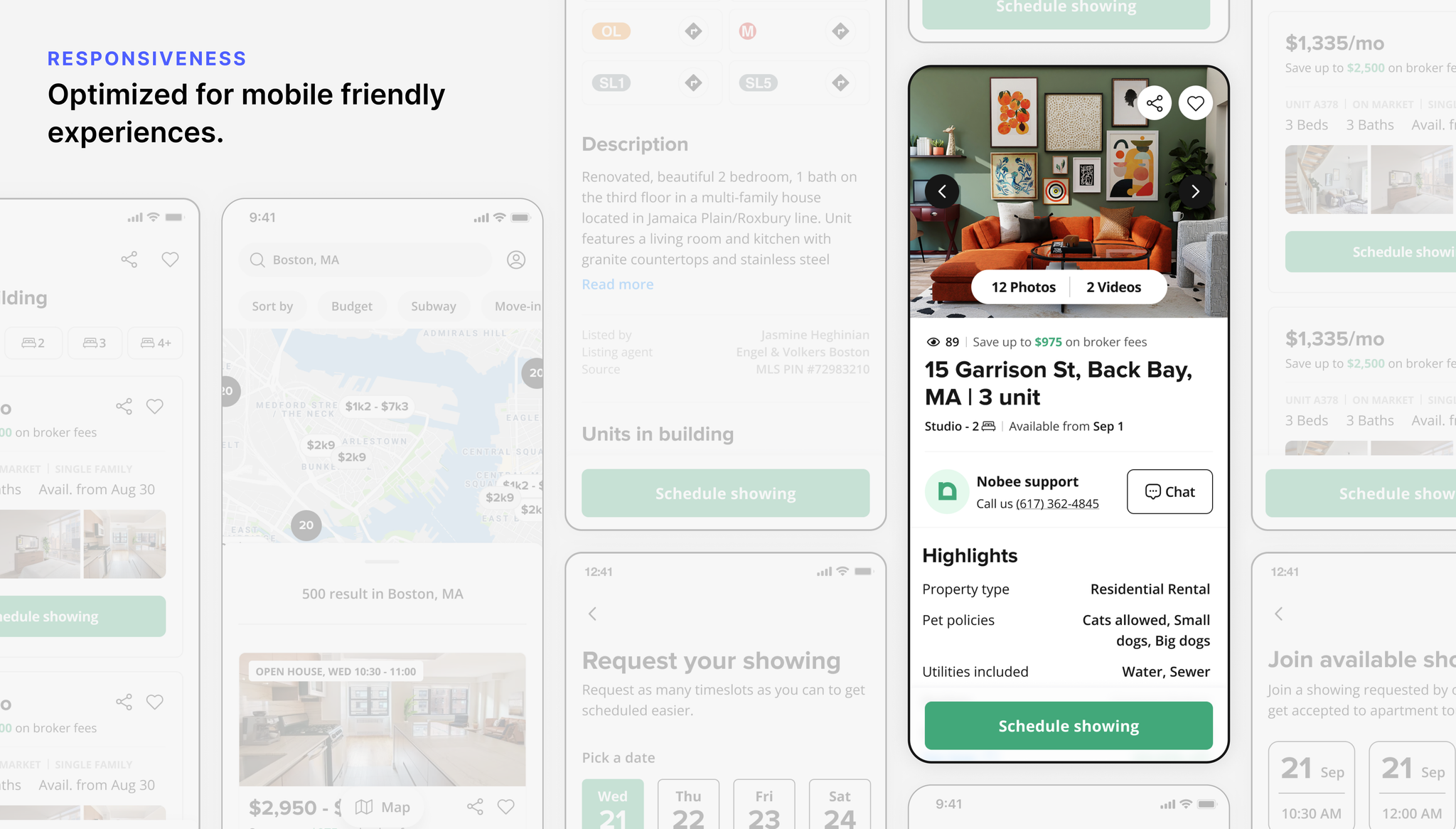
Delivery pulled the work together: one design language (a restrained palette, a shared type scale, and branded illustrations), a mobile-first build of every screen, and Covid-safe showings with clear scheduling and status tracking so renters could tour with confidence.
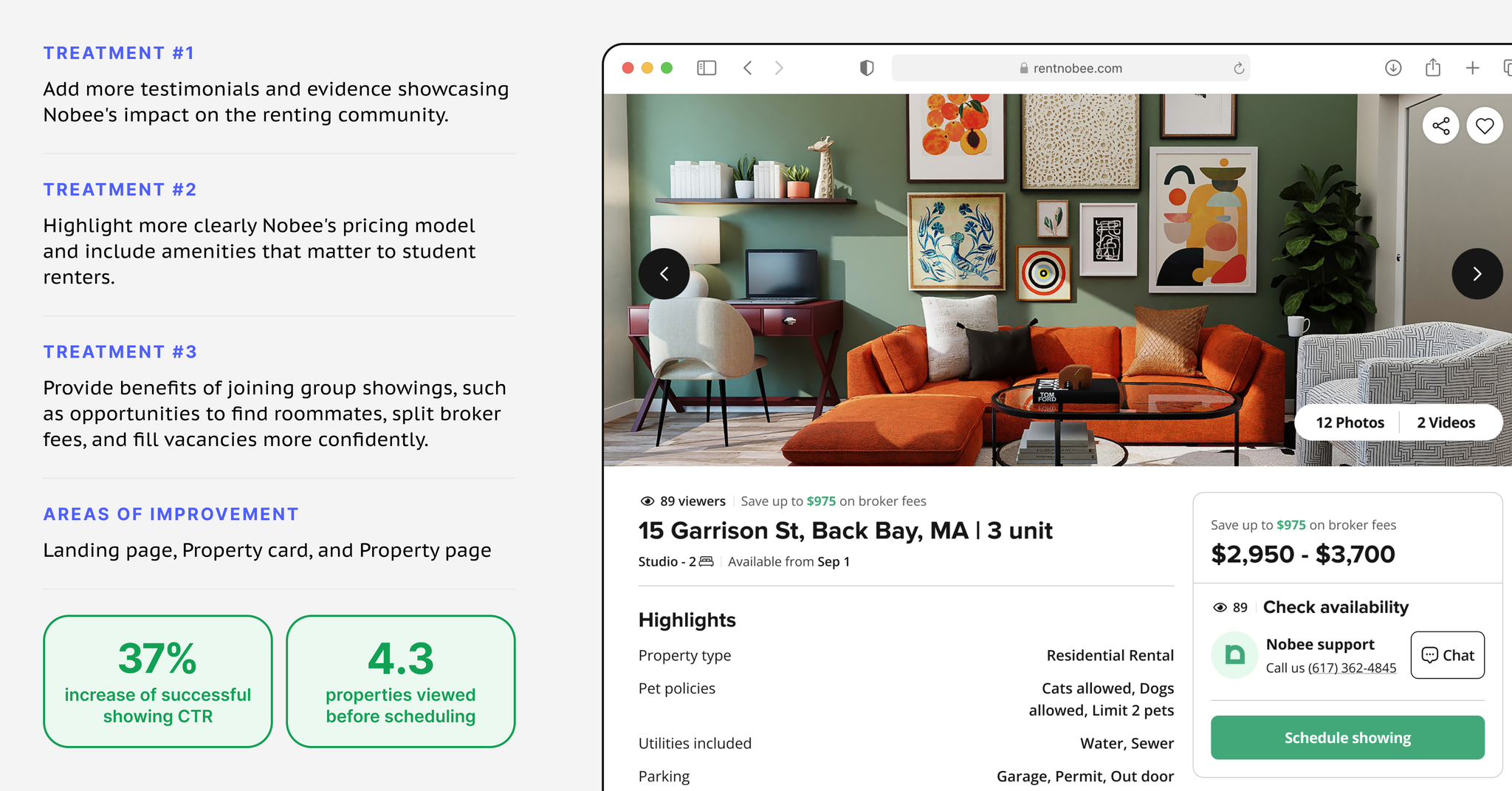
Within three months of release - and through the peak 2022 housing season - successful-showing click-through rose 37%, after an average of just 4.3 properties viewed.
- A product roadmap keeps a team sane. Without a shared vision we stepped on each other's toes - rushed outcomes and reactive calls instead of proactive ones.
- Don't be afraid to iterate. "Ideal" solutions that cost a lot often stopped fitting as the work evolved; better to drop the sunk cost and follow the experience.
- Leading is more than being organized. My first time leading a team - constructive feedback and being genuinely supportive are traits I'm still growing.